The famous pair stands on the sand at Eagle Beach, on the low-rise side of the hotel strip. There is no gate, no ticket, and no queue in the way there is at a lot of famous photo spots: you walk down onto the beach and they are simply there, roots exposed, trunks angled southwest.
Here is the detail almost every guidebook fumbles, and it is a good one to hand a curious eight-year-old: the tree in that photo is a fofoti, not a divi-divi. They are two different trees. The divi-divi (locals call it watapana) grows inland in the cunucu (the dry countryside) and leans in exactly the same direction for exactly the same reason. Both are bent by Aruba's near-constant trade winds, which blow from the northeast almost every day of the year. Once your kids know that, every tree on the island turns into a compass.
Photographers chase this spot at sunrise and again in the last hour before sunset, when the low light rakes across the sand and the crowd thins out. Middle of the day the trees give almost no shade (that is the whole point of their shape), so plan the picture around the edges of the day and the swim around the middle.
Aruba's famous bent tree. The steady trade winds push it as it grows, so every fofoti leans the same way, away from the wind. It's the island's natural weathervane!
The Papiamento word is the same as the tree's name: fofoti. The inland cousin is the watapana, or divi-divi, which is also the name of Aruba's national tree.
More finds nearby
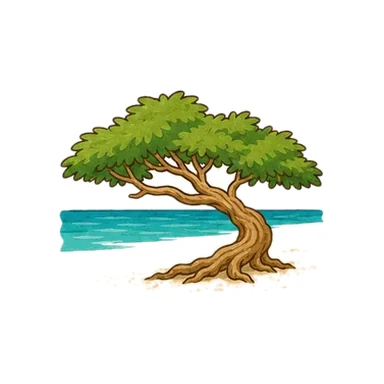 Eagle BeachWide, white, calm and shallow: the best all-round family beach on Aruba.
 Sea Turtle NestsThose roped-off squares hold a hundred eggs. What your family should do about it.
 Aruba AloeA free, air-conditioned factory tour, and the plant that made the island famous.
Turn the list into a treasure hunt
Buska gives kids 75 Aruban treasures to find and photograph (this one included) and turns the trip into a keepsake book. Free to start, no ads, private by default.